Reflx Lab Pan 200, Silver, Wind, and Cold Air
This roll was shot on an overcast winter day in Norway. Reflx Lab Pan 200, the original “spy film”.
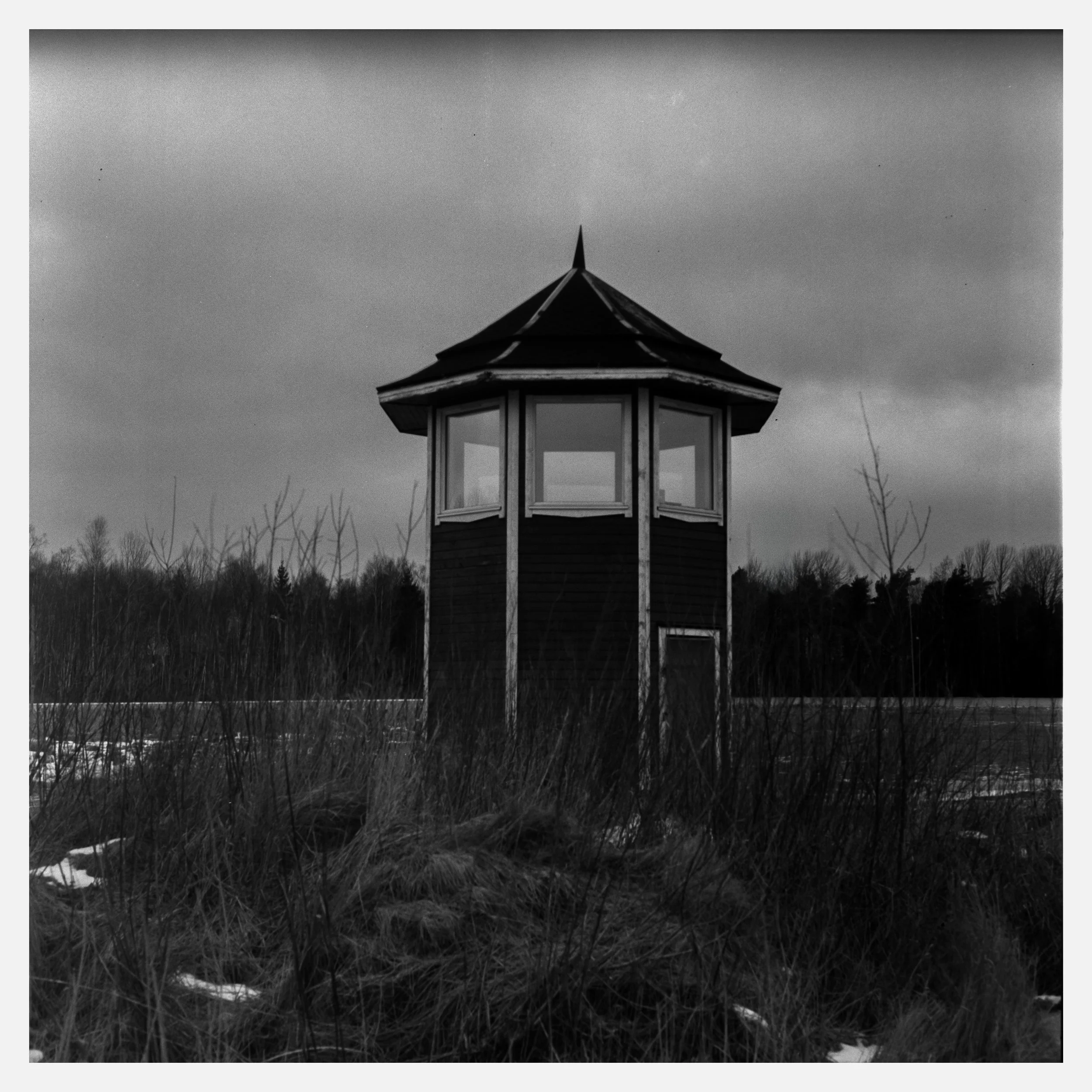
Lately, I’ve been framing in black and white. Reading, learning, and thinking more about silver content. While researching what to shoot that day, one location kept coming up in my mind: The Silver Bridge. A bridge connecting the old town with the new in Fredrikstad.
Knowing that Pan 200 is a respool of old AGFA AVIPHOT aerial surveillance film, the pairing felt natural with the bridge literally tying two eras together.
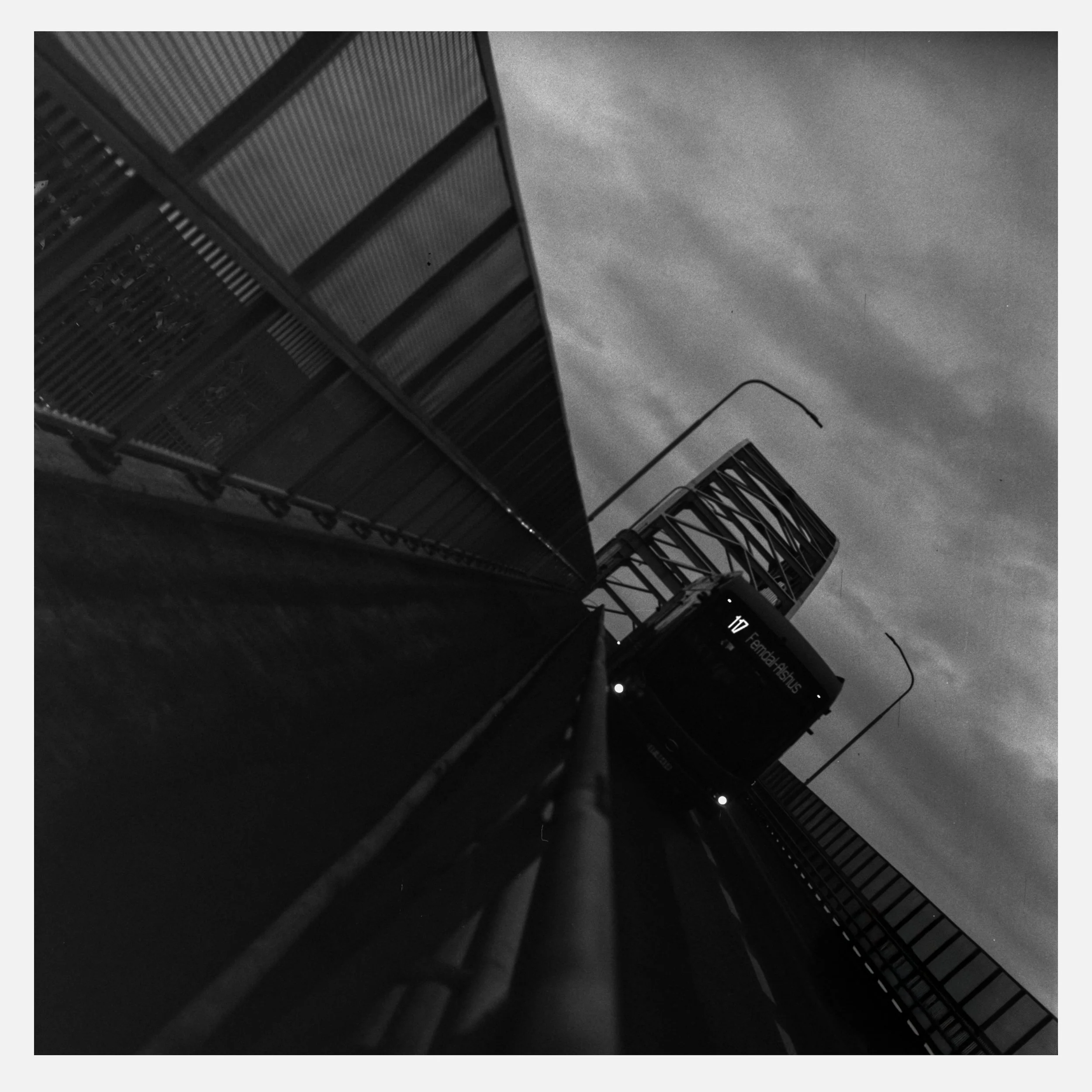
After dropping off my oldest at school, I packed the Hasselblad 501CM and drove the twenty minutes to Fredrikstad.
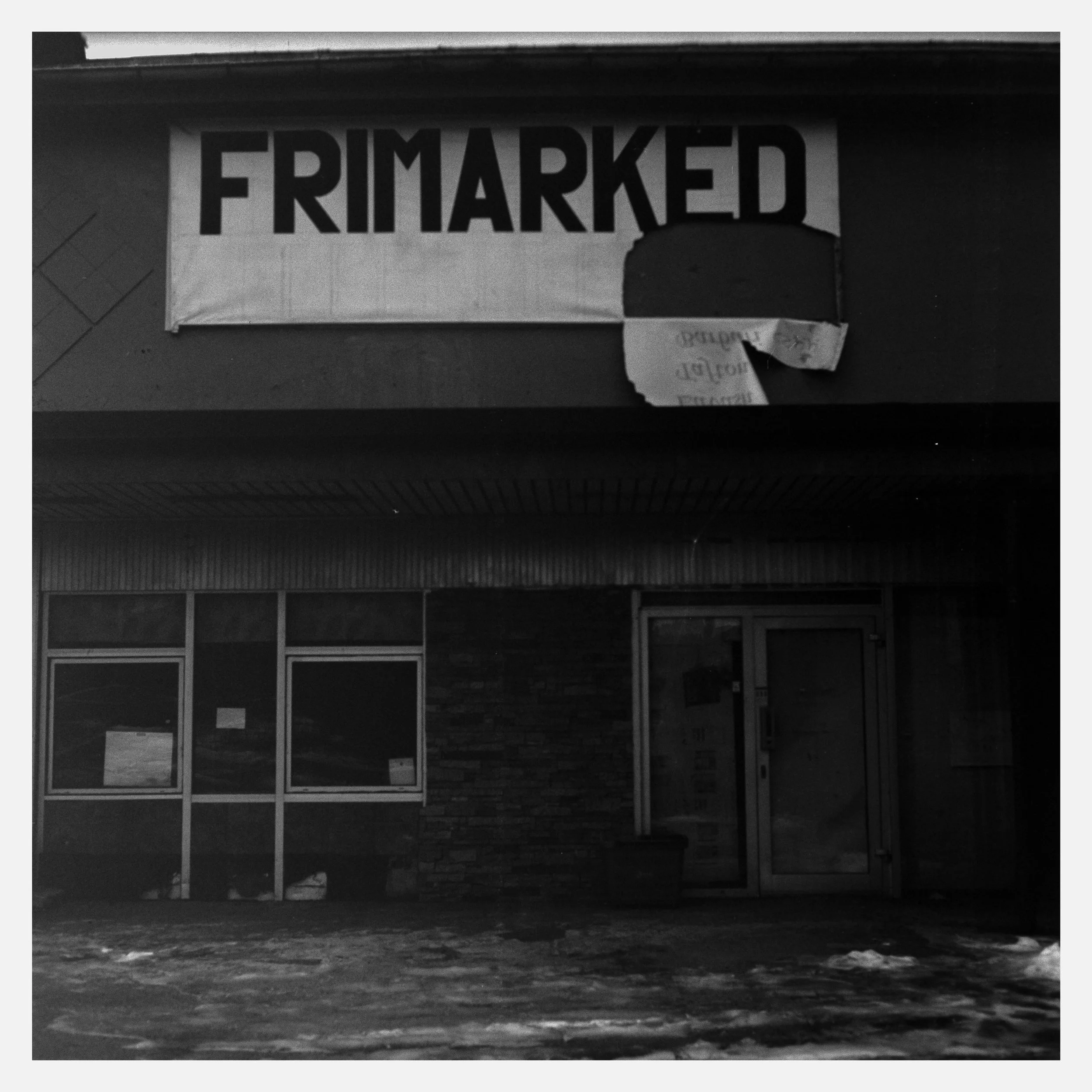
On the way in, I passed an abandoned flea market and had to stop.
Pan 200 was originally made for aerial surveillance: fine grain, sharp contrast, and extended sensitivity toward the infrared spectrum. Its ability to cut through atmospheric haze and separate tones in vegetation made it invaluable for reconnaissance and mapping, particularly during the Cold War.
There’s something fascinating about repurposing a film designed for observation and control into something slow and personal.
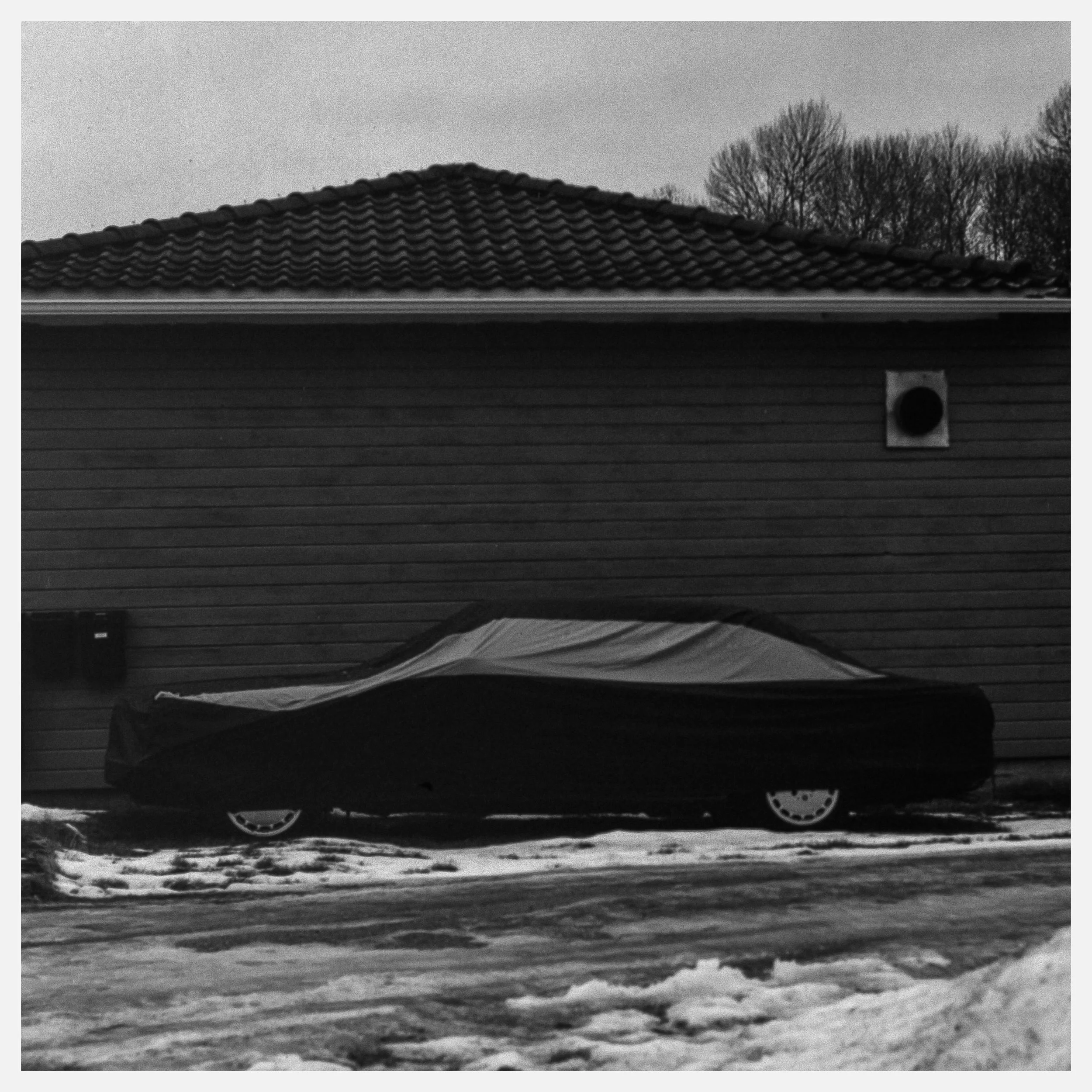
That infrared sensitivity is worth mentioning. With an IR72 filter at around ISO 12, it’s possible to achieve a mild infrared effect. I haven’t tested this myself, and from what I’ve seen, the effect is subtle, but nowhere near as dramatic as something like ILFORD SFX 200. That said, infrared photography is still unexplored territory for me, so take this as observation rather than authority.
At the Silver Bridge, I stayed with the standard black and white shooting, as I had no IR72 filter. The weather was unforgiving, overcast, windy, and bitterly cold. I chose to handhold the Hasselblad rather than set up a tripod.
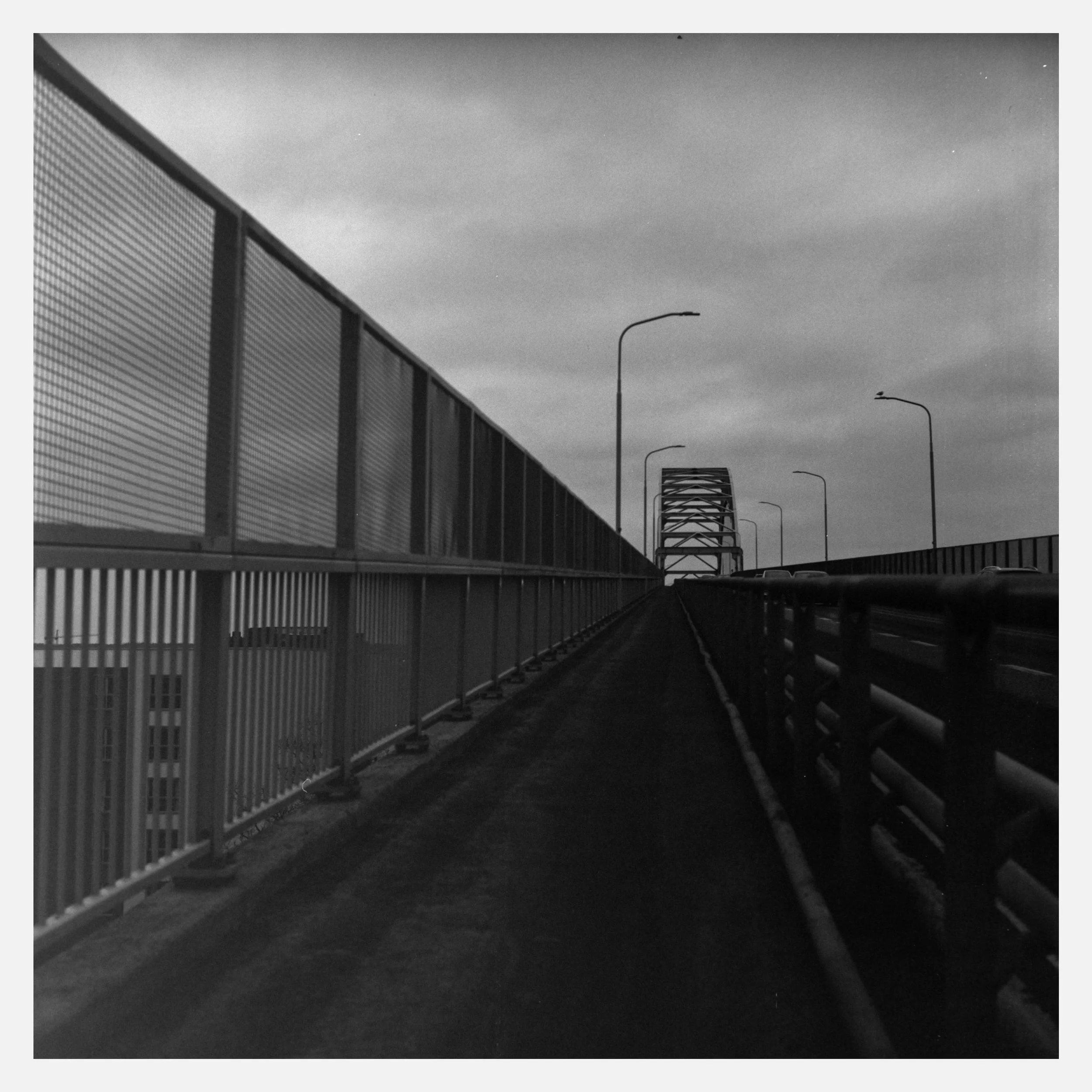
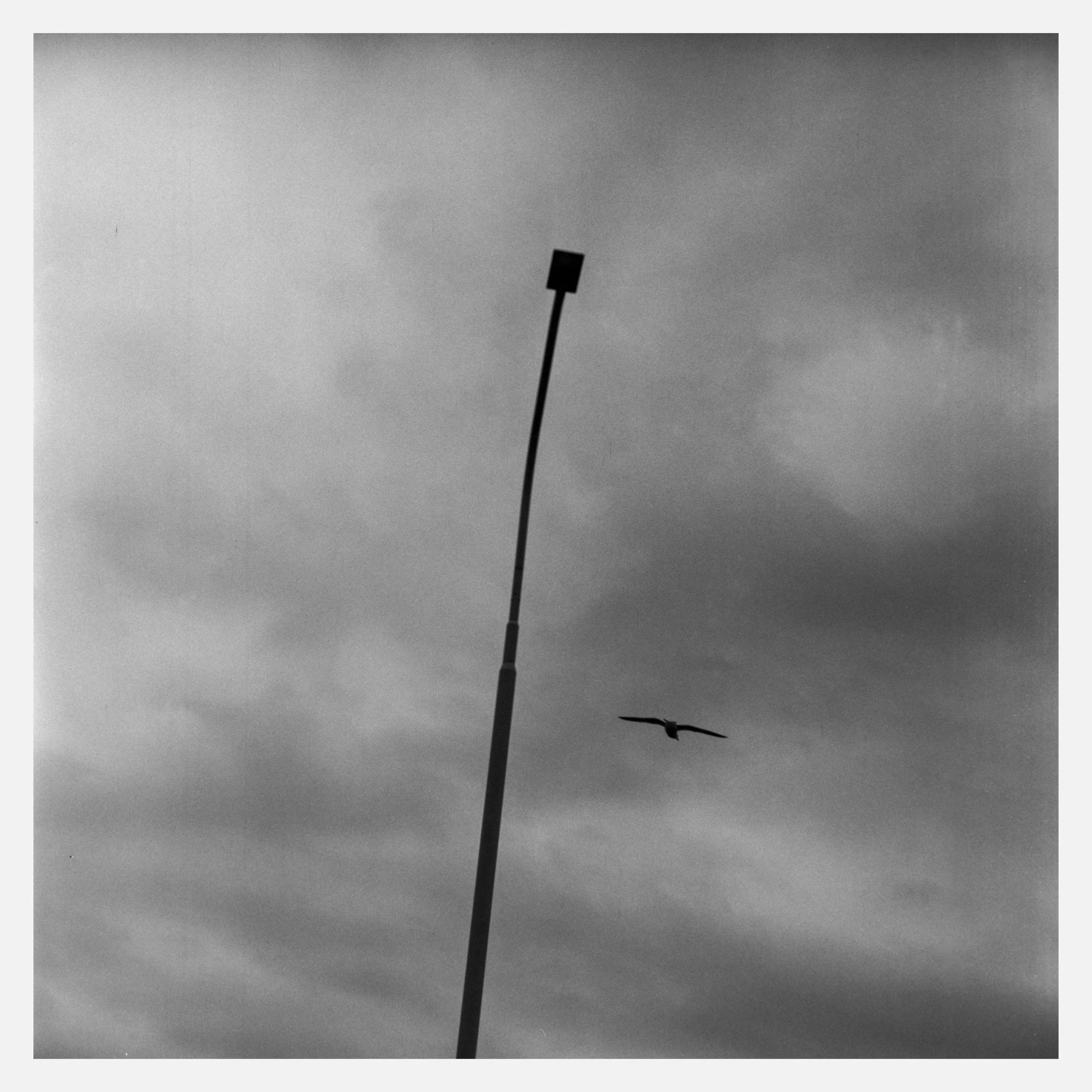
Walking up, I noticed a bird resting on a lamp post. That’s the frame. It flew off just as I focused, but straight into the pocket. That moment landed perfectly. Frozen mid air. Sharp.
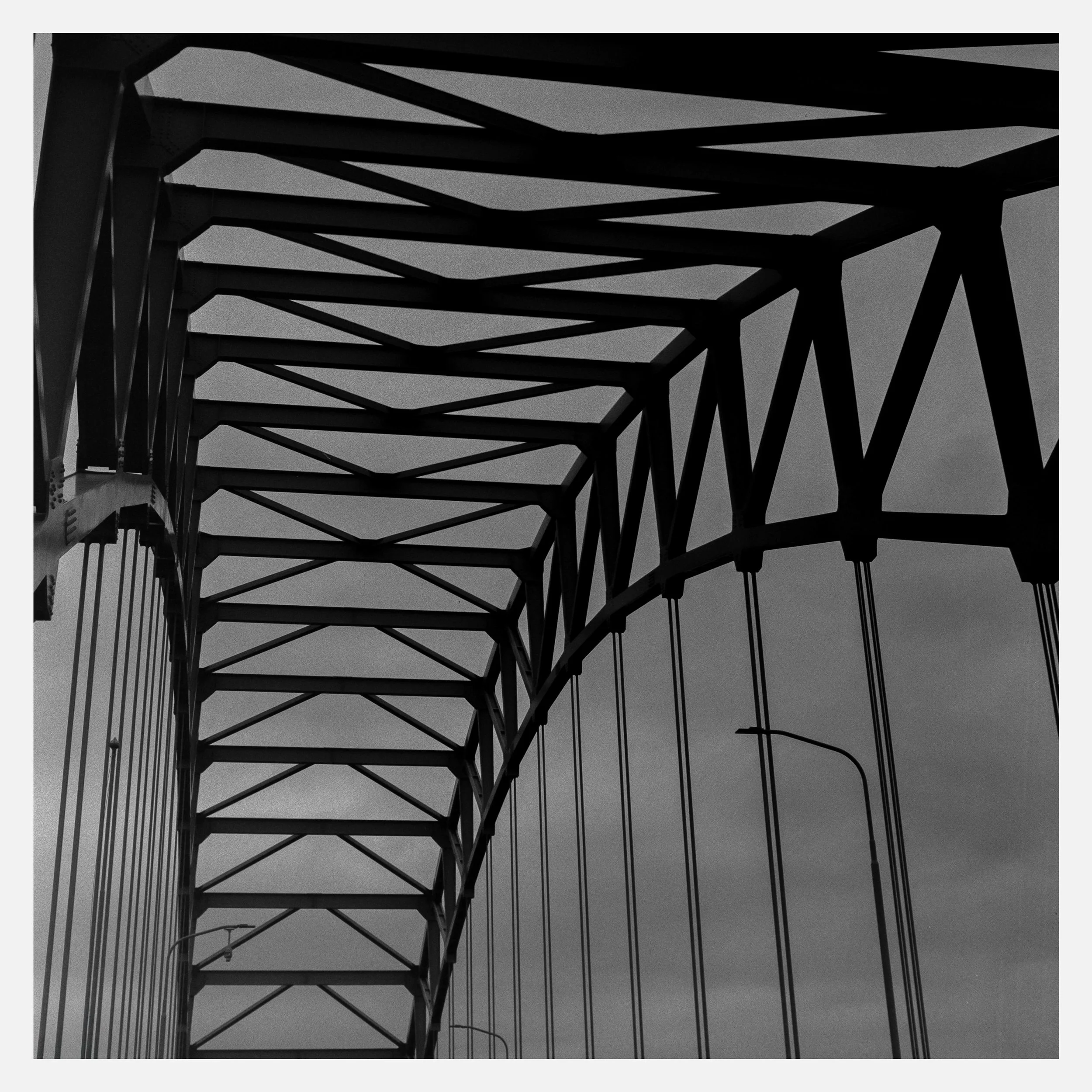
The bridge itself is massive and structural. I leaned into that, isolating details and carving compositions from repeating lines and hard geometry. The light poles became interruptions, breaking the rhythm, adding tension. As a series, I’m genuinely happy with how these frames came together.
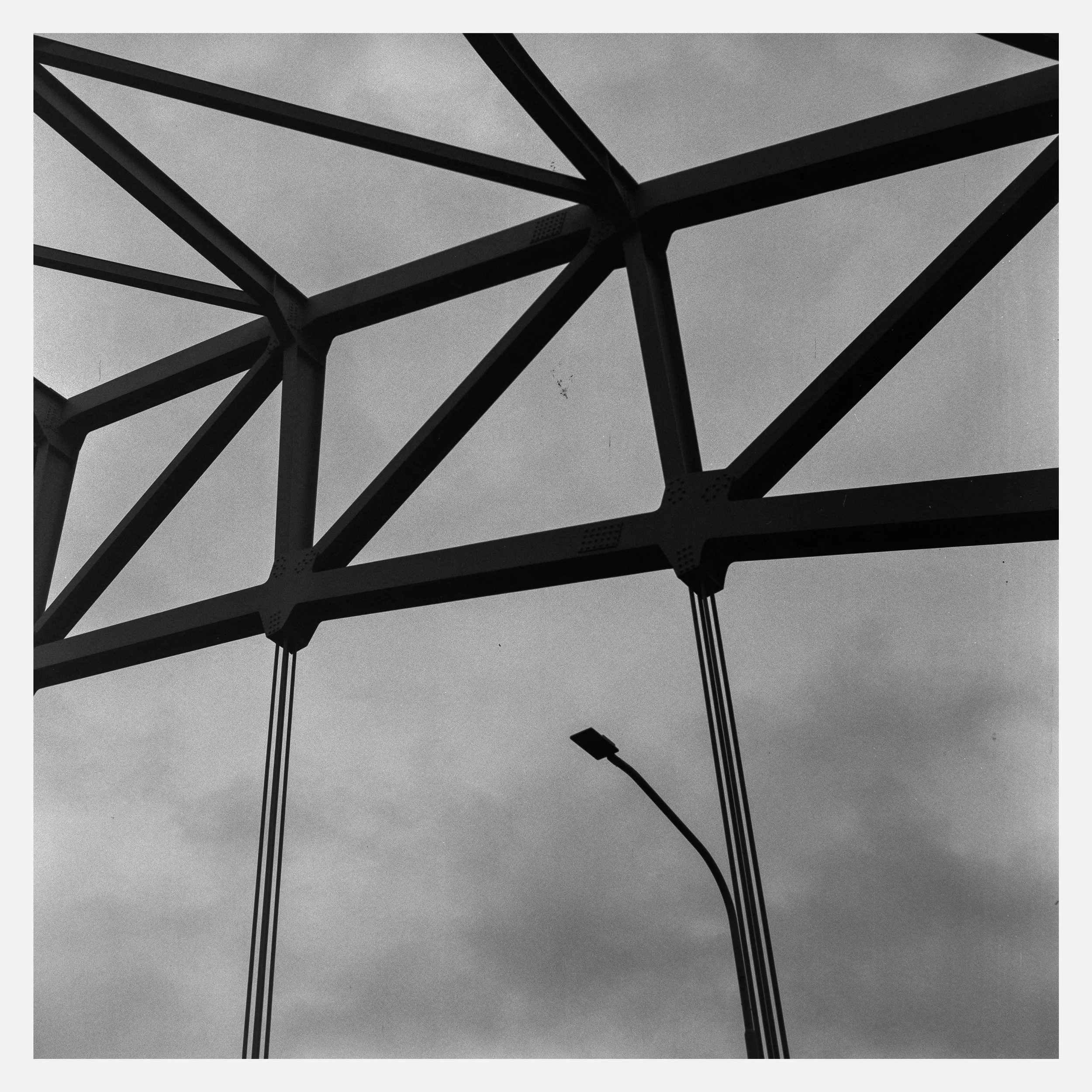
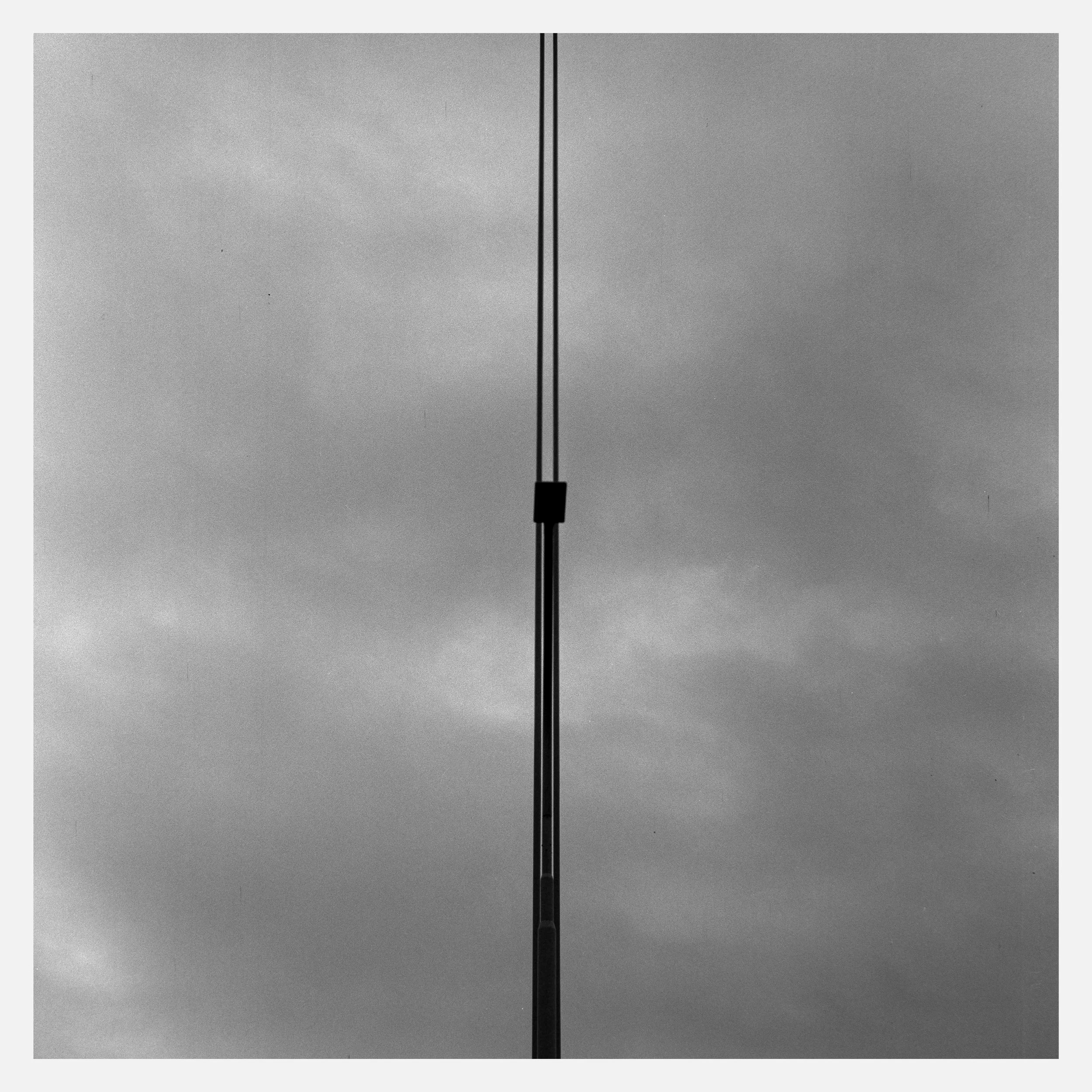
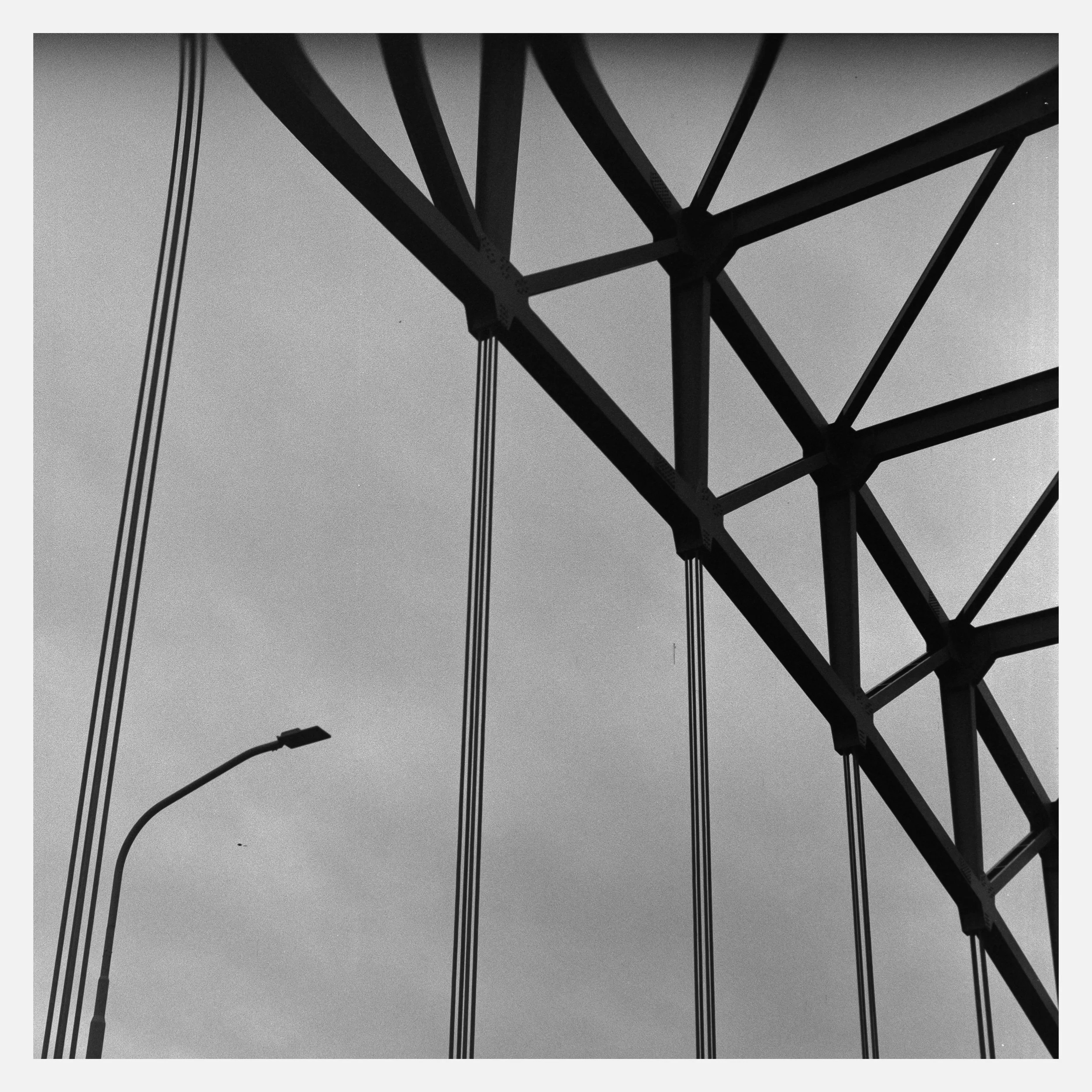
Development was almost identical to my recent Adox CHS 100 workflow. I added 30 seconds to the development time, and with a 15% reduction for rotary processing, the final time landed at 5 minutes and 10 seconds. Water stop and rinse.
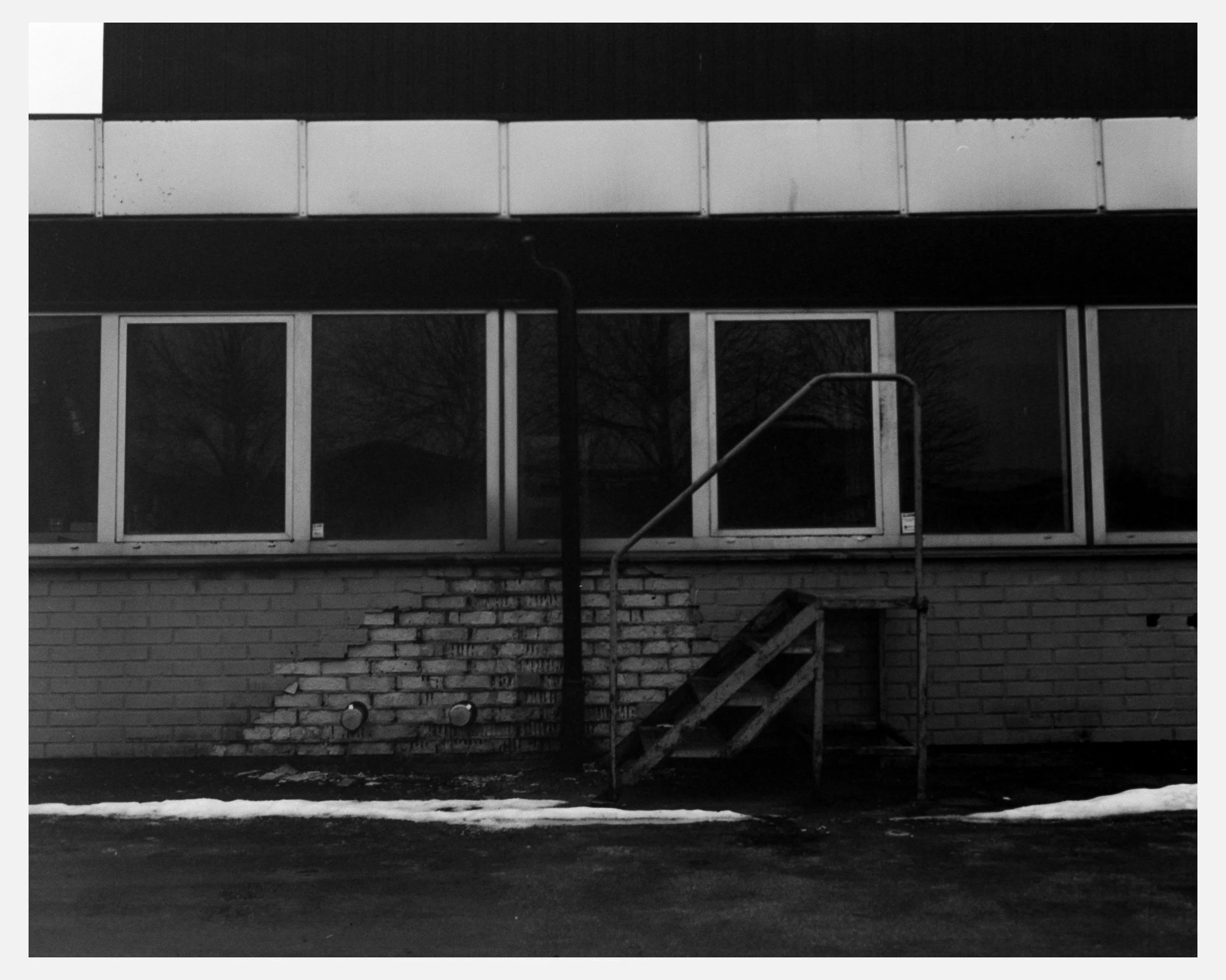
Black and white isn’t my default. But every time, I seem to enjoy the results more than the act of shooting itself.
Pan 200 delivers a special kind of contrast, slightly brown toned, moody, super sharp, with fine grain that holds up beautifully. It’s a film worth picking up. Personally, I still lean toward Adox CHS 100, but at the same price point, both are excellent tools to always have in your film bag.