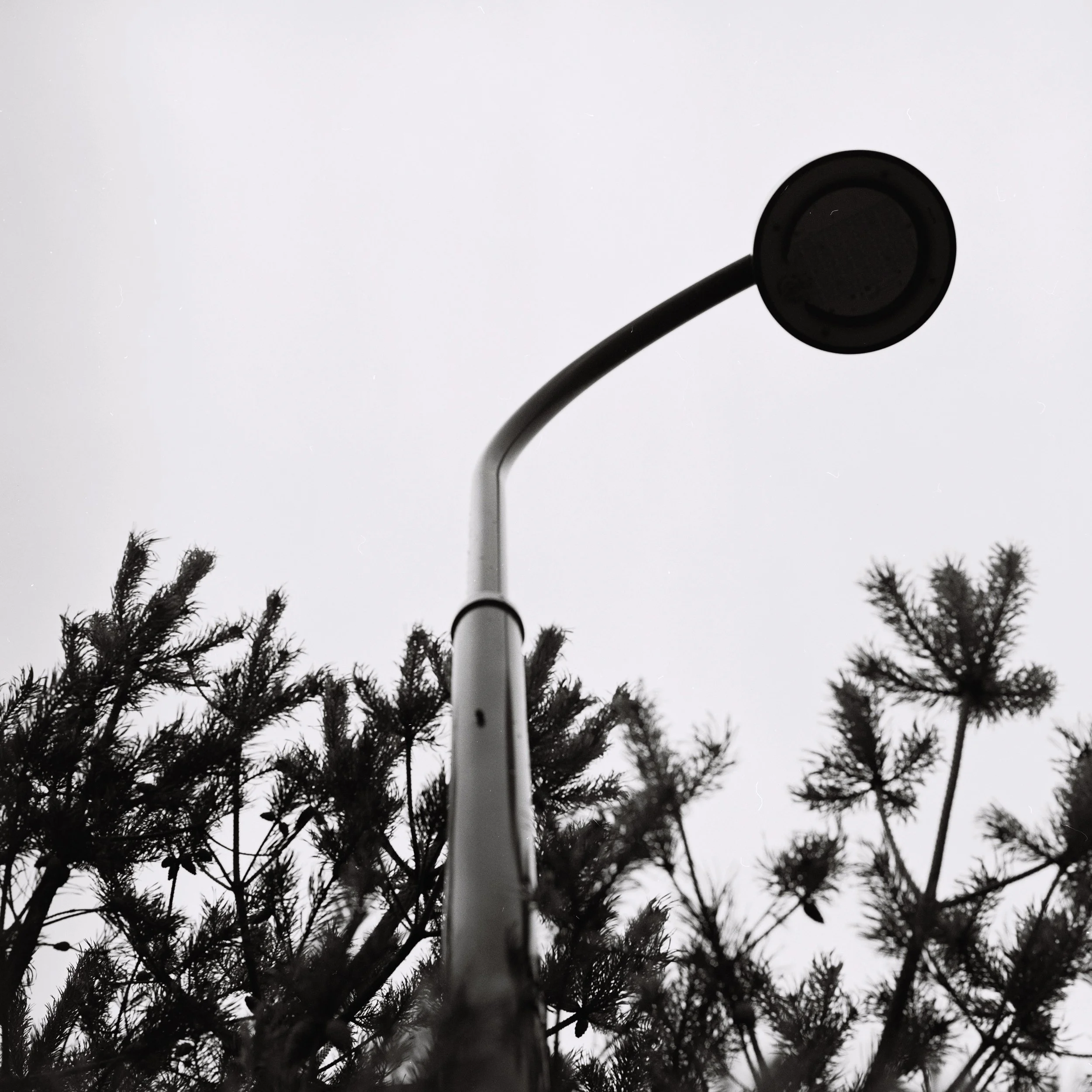
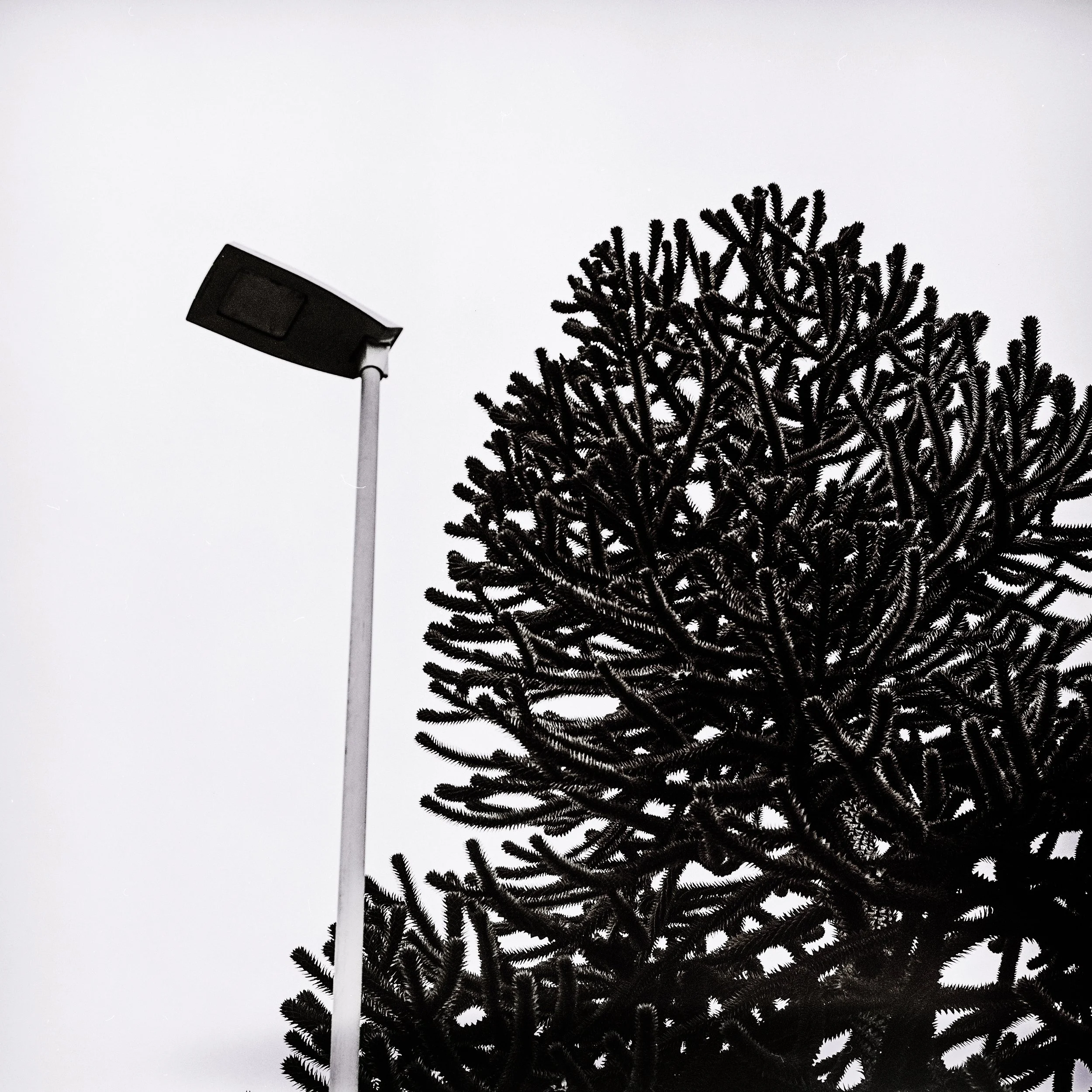
A Pause in the Rain, a Roll of Film, in a Square World
I was in Stavanger recently and in between the rain showers with the persistence of a broken metronome ( on - off - off - on ), I found myself at Stavanger Foto picking up a small parade of cameras. Some familiar. Some curious. One that quietly cleared its throat and said: you have twenty minutes. So use the time wisely and effectively.
That camera was the Hasselblad 501CM.
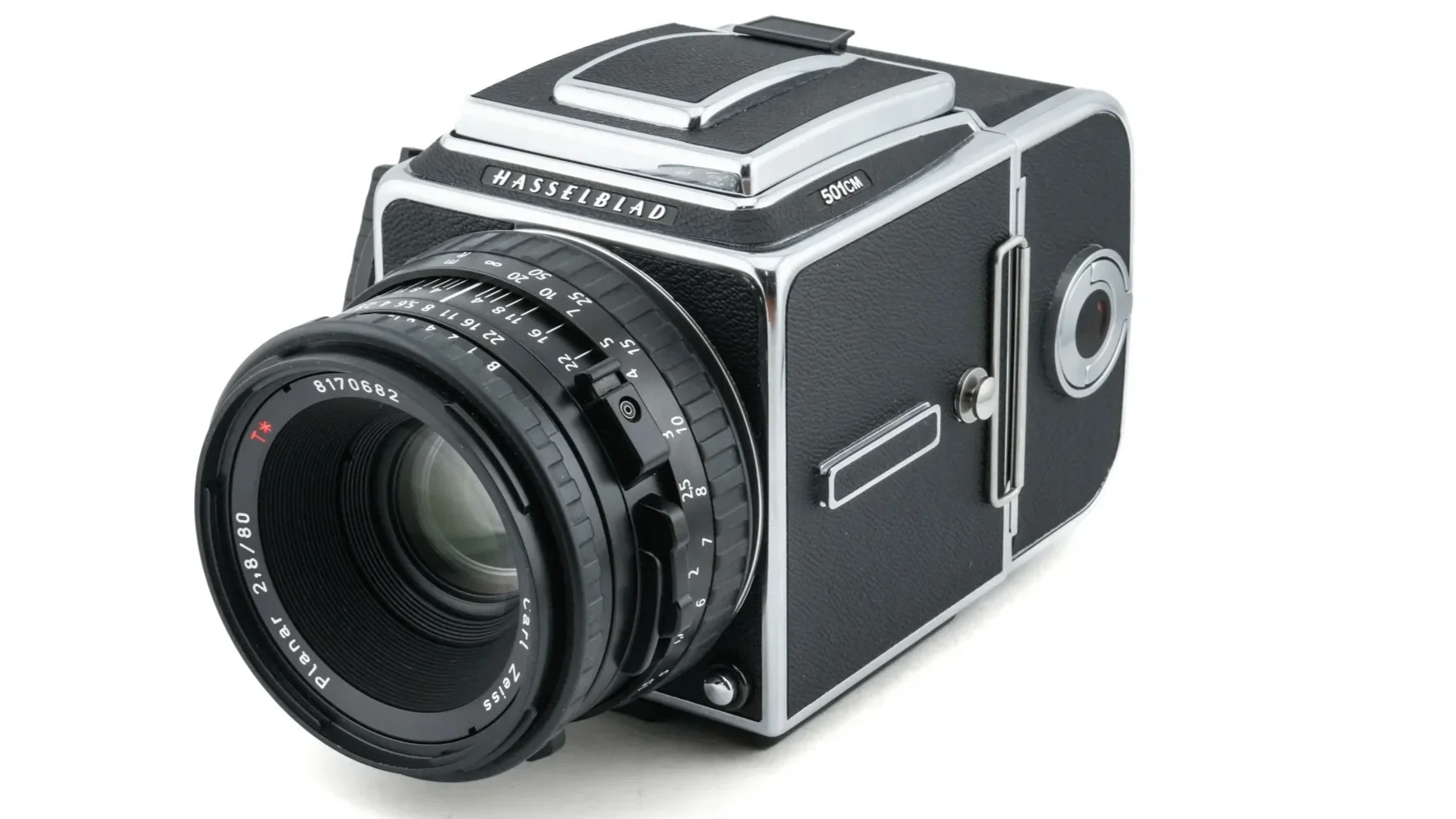
I’ve never really understood the need for the square format. But my brother Danny has spent years there in the square world, comfortably composing in 6×6, while I’ve mostly orbited around rectangles. Still, borrowing the 501CM felt like an invitation worth accepting. Not to master it. Just to try to understand it.
The 501CM comes from the late 1990s, a strange and fascinating crossroads where photography was beginning to glance nervously toward digital while still deeply committed to mechanics. It belongs to Hasselblad’s V-system lineage, a family of cameras defined by modularity, precision, and a refusal to rush. No batteries for the shutter. No automation holding your hand. Interchangeable finders, backs, lenses. A camera designed as a system, not a shortcut.
What made it special then is exactly what makes it special now. It trusted the photographer.
Stavanger gave me a brief ceasefire. Twenty minutes without rain. Not enough time to chase images. Just enough time to be present.
I loaded the camera with XPS 120 black and white film, which felt like the only honest choice for a first meeting. No colour safety net. No distraction. Just light, contrast, and intent. Black and white on medium format doesn’t whisper. It screams in high volume. I understand why many photographers over the decades have used this camera for their professional work. It totally makes sense.
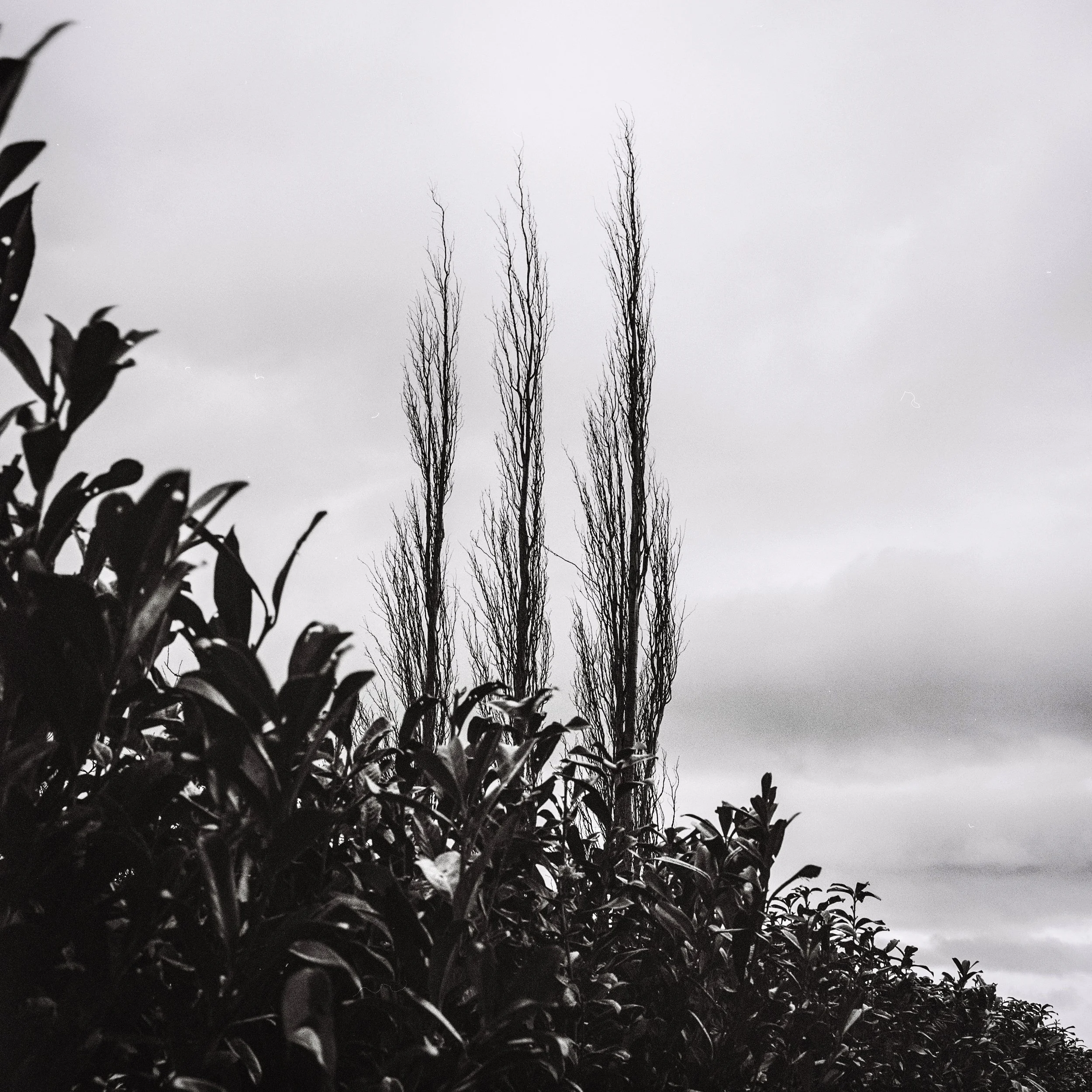
Looking down into the waist-level finder felt like stepping into a polite optical rebellion. Left became right. Right became left. Up and down swapped places without warning. My brain protested. My hands hesitated. The world felt slightly out of phase.
And then something important happened.
I slowed down.
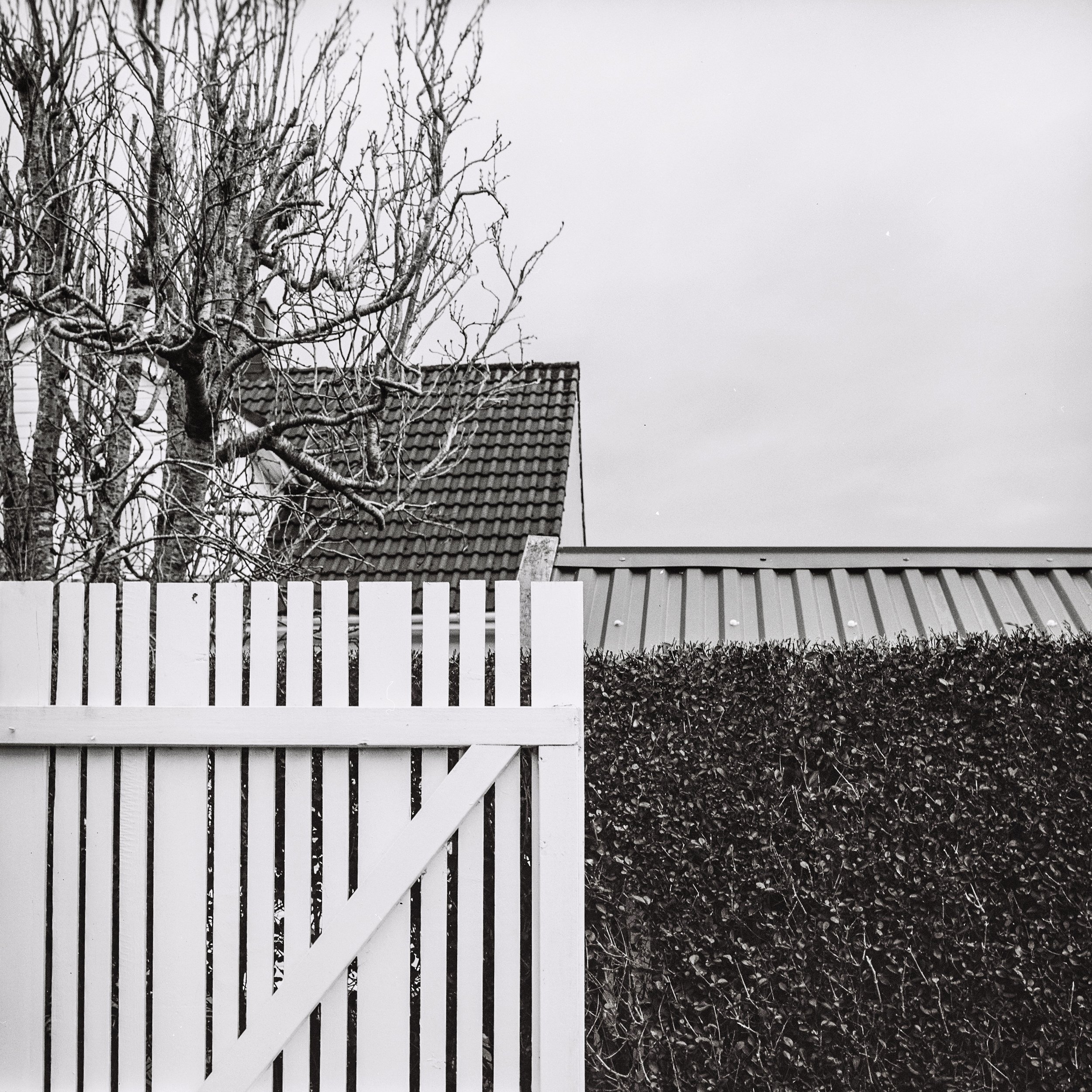
Tilting the camera was awkward at first, almost ceremonial. Every movement carried weight. Every decision took time. The square frame demanded balance. The film demanded commitment. Stavanger’s wet streets turned graphic. Pavement became texture. Skies simplified. Shadows grew opinions.
You don’t “try a few” frames with a setup like this. You decide, then you expose.
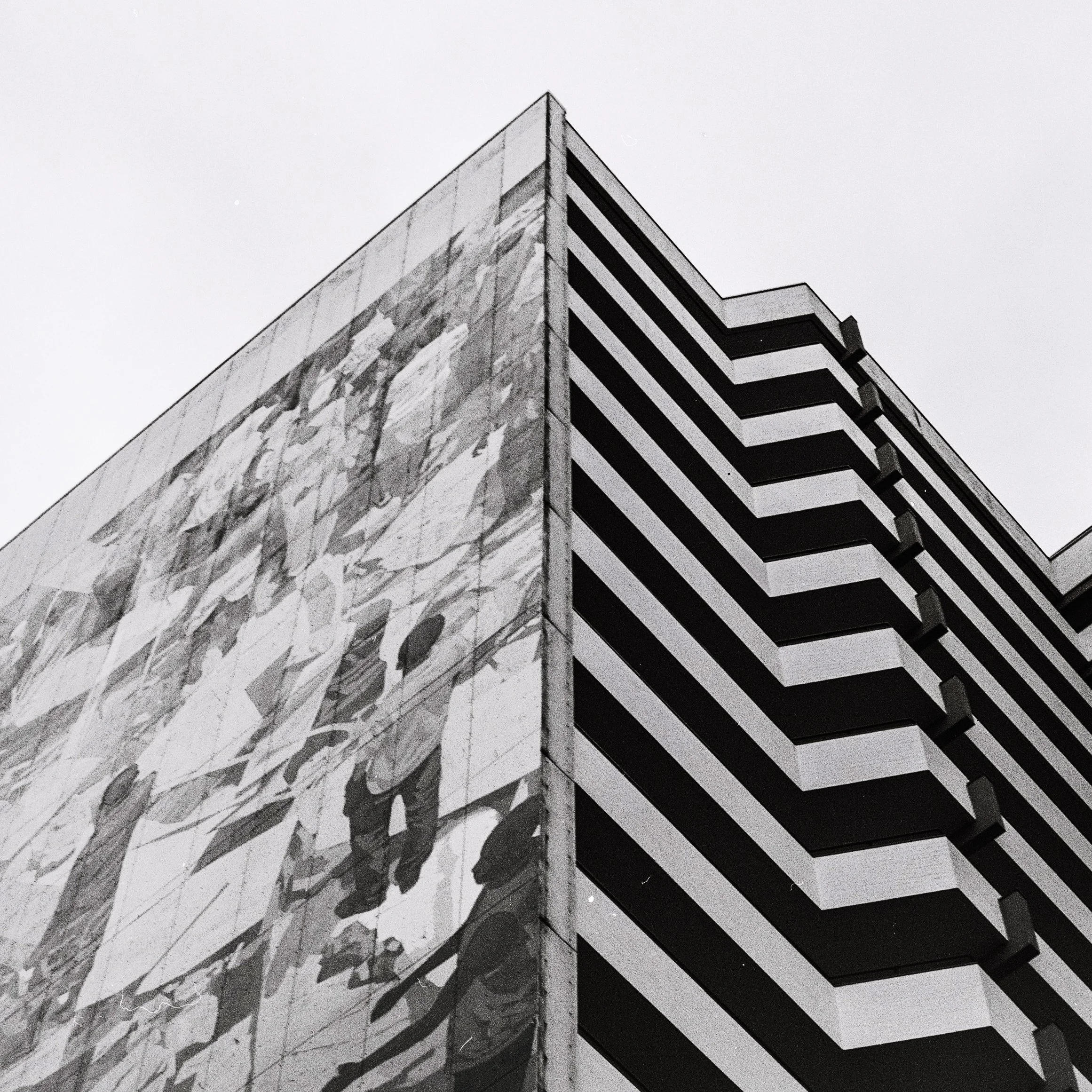
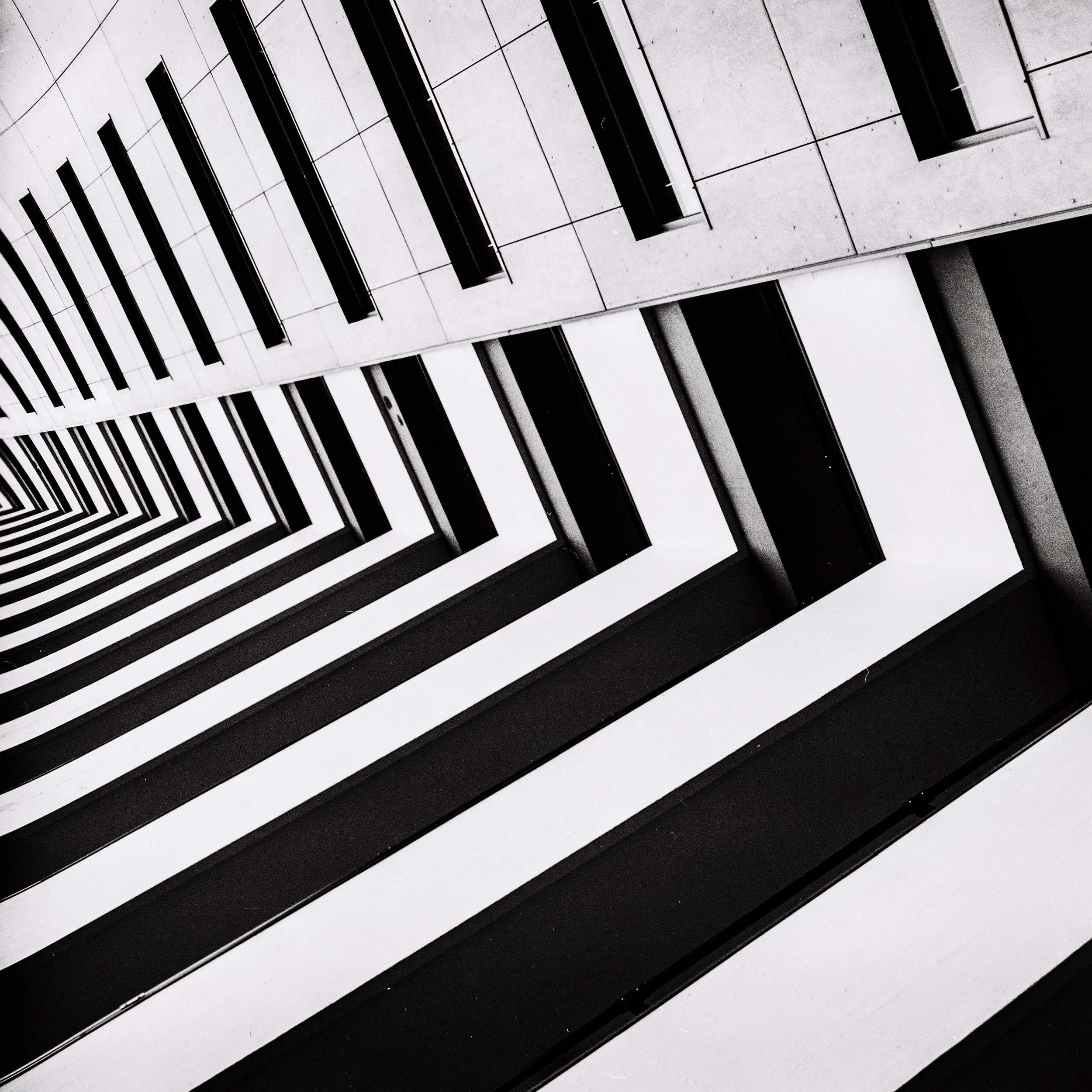
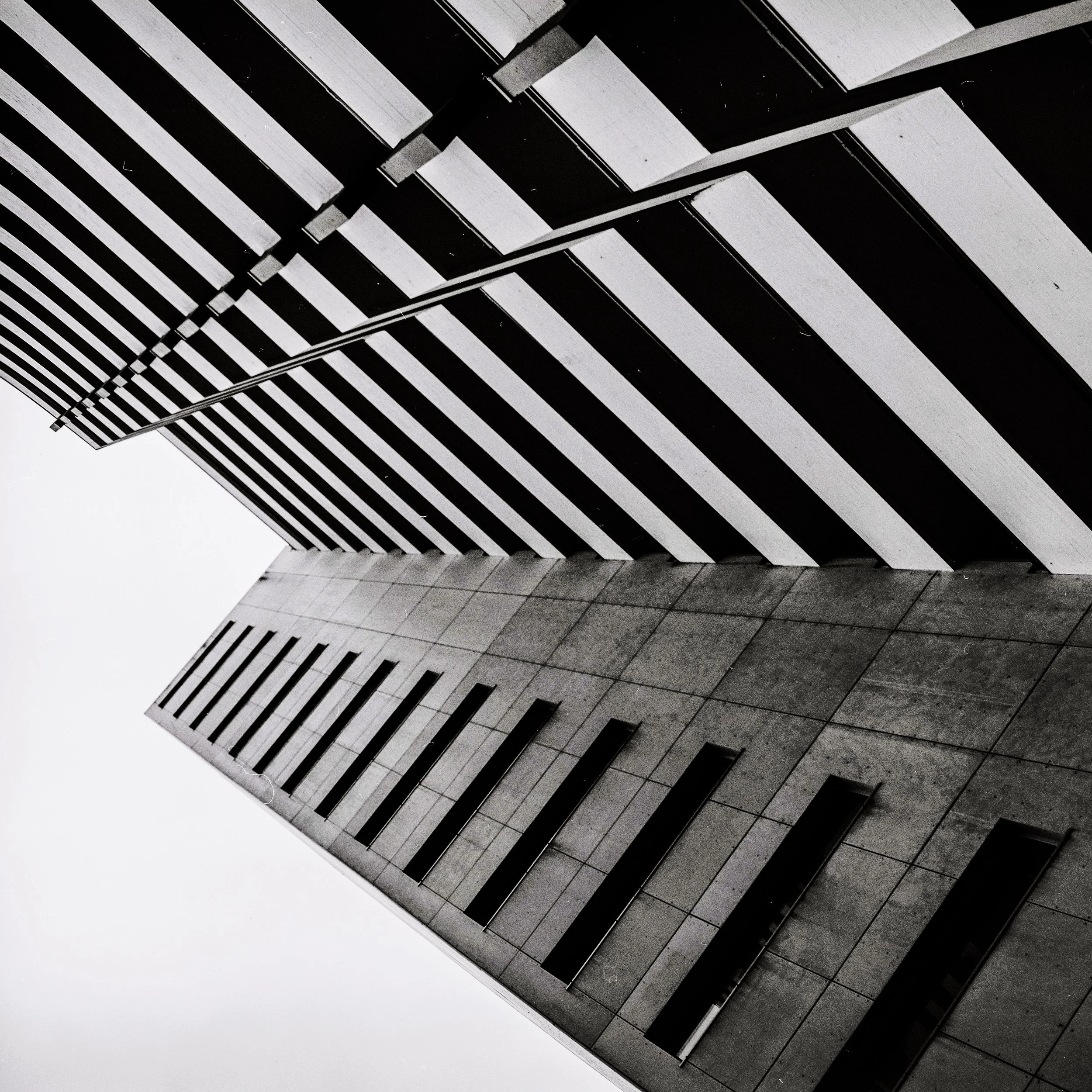
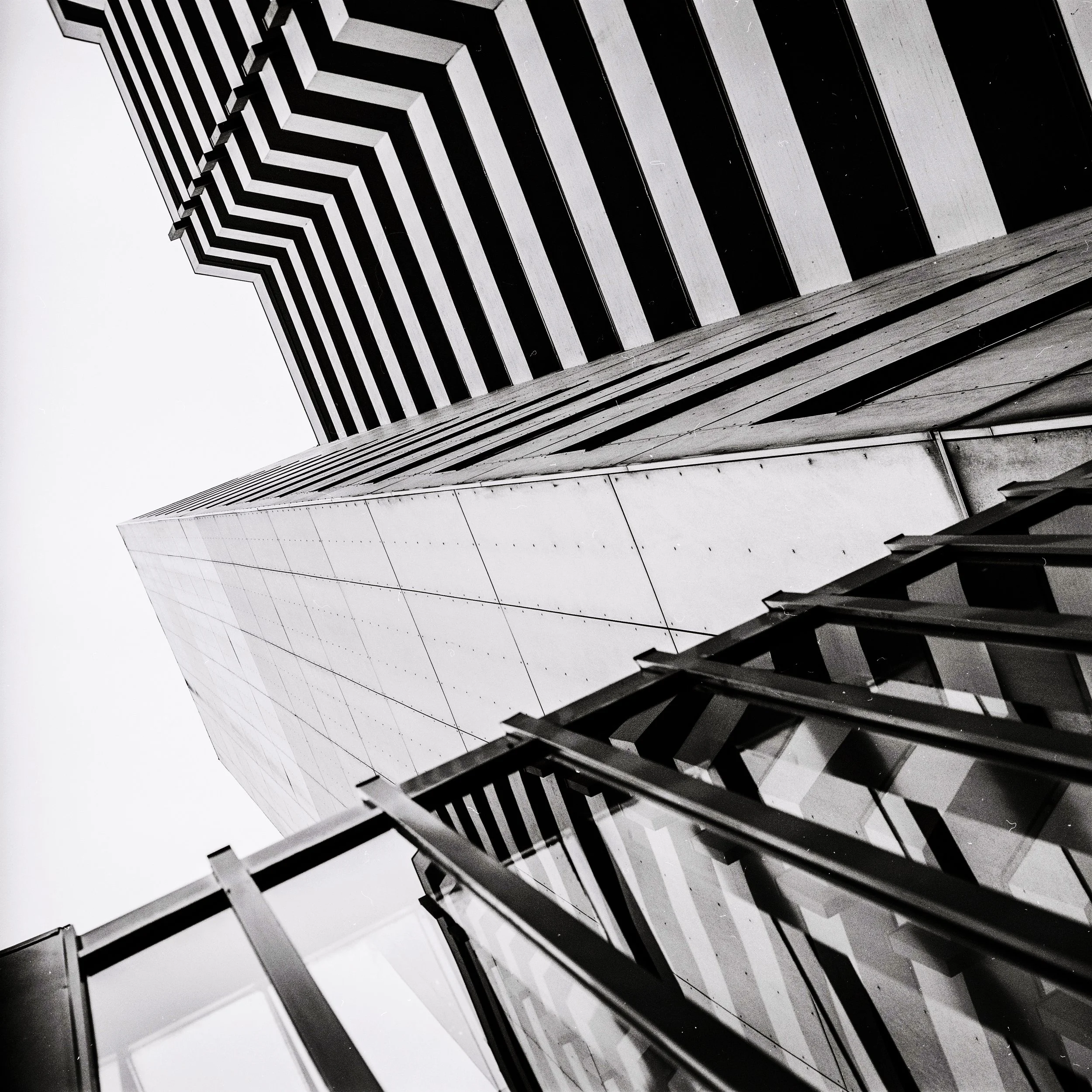
After finishing the roll, I walked back to Stavanger Foto, film still warm from the camera, and we developed it right there. No delay. No mystery gap. From camera to chemistry. From chemistry to scan. And then, the real magic.
We stepped into their darkroom and made a print of one of the images.
Seeing that square frame emerge on paper was something else entirely. Not on a screen. Not zoomed to 200 percent. Just light, paper, contrast, and time. It was physical. Tangible. Undeniably real. Honestly, it was AWESOME.
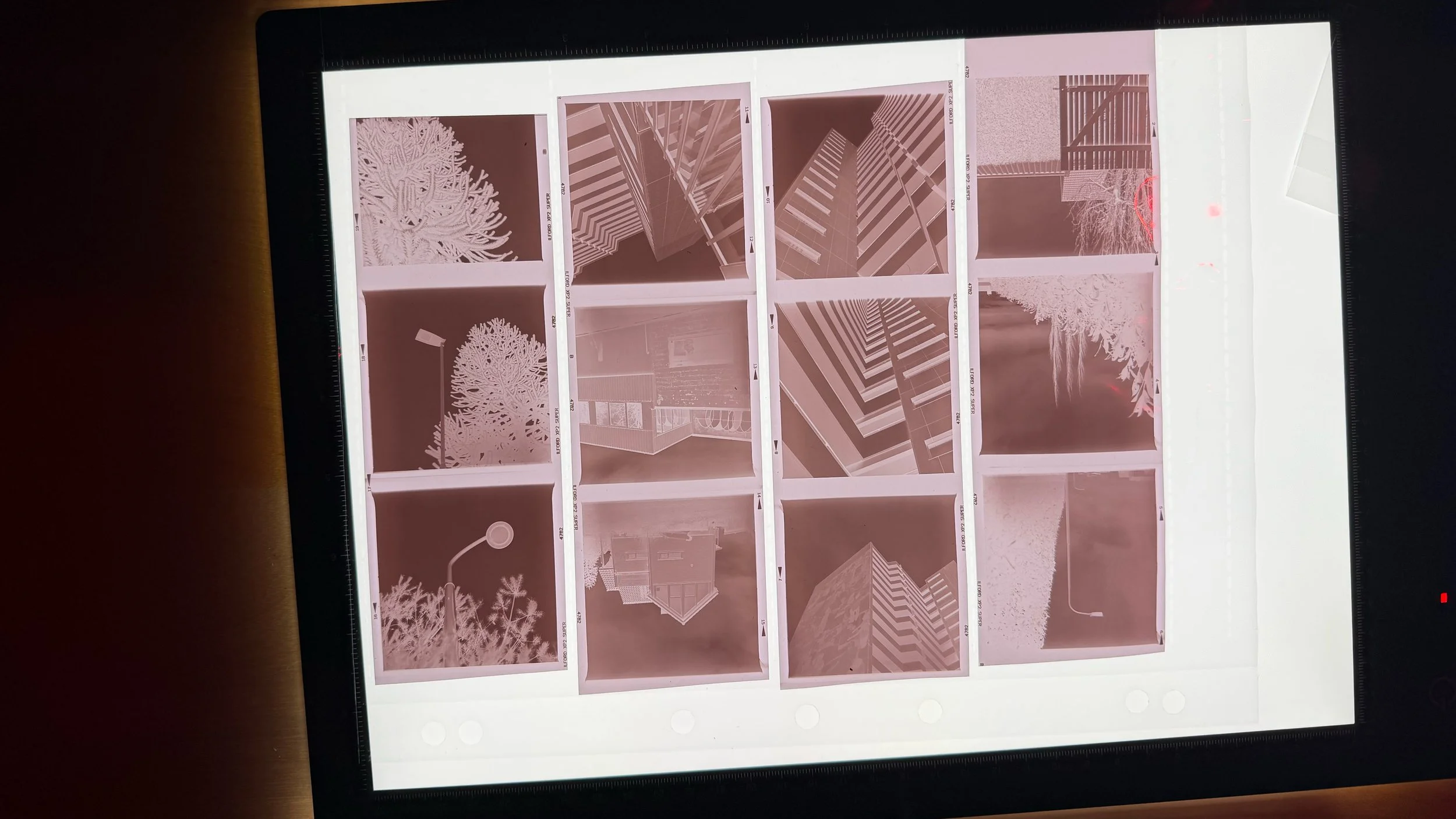
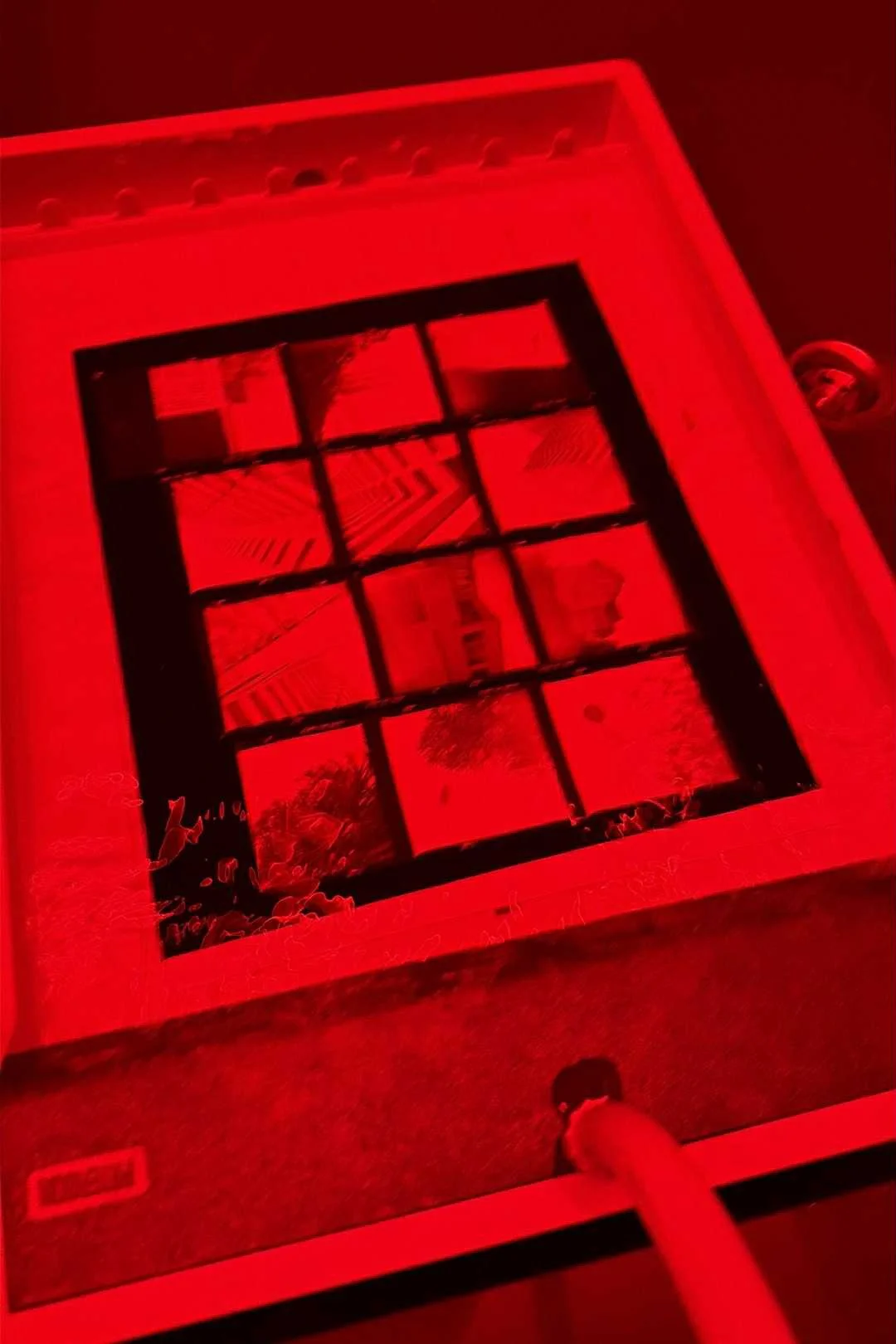
That moment tied everything together. This is why photography is not an ABC exercise. It’s not just lifting a camera, placing it in front of your eye, and pressing a button. It’s technique. Orientation. Patience. Process. It’s allowing yourself to feel slightly uncomfortable and realizing that this is where learning lives.
The 501CM reminded me why it matters to expand the horizon. Digital and analog. 35mm, medium format, large format. Each format reshapes how you see. Each one asks something different of you and gives something different back.
Large format is waiting later this year. March already has a quiet underline in my calendar.
For now, I’ll remember Stavanger, the pause in the rain, black and white film, the smell of the darkroom, and a square viewfinder that flipped my world just enough to remind me why I fell in love with photography in the first place.